

Leadership and Administration
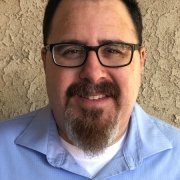
Douglas Barrera, Senior Associate Director for Faculty and Community Engagement
Bio
Douglas (Doug) first joined the staff in 2008, as the coordinator for the Civic Engagement internship course. He became an assistant director with the Center in 2012. He has been involved in community engagement work for over 20 years.
At the Center, Doug works directly with faculty and community partners to develop community-engaged courses for undergraduates. He has developed and directs UCLA’s Collaboratory initiative, the Astin Community Engaged Scholars and the Changemaker Scholars programs. He also facilitates the Center’s Engaged Pedagogy Workshop series and course development for the Chancellor’s Award for Engaged Scholars initiative, and is currently developing a place-based initiative related to youth empowerment in west L.A. He serves as the Campus Champion for the center’s Jumpstart program. Doug teaches courses for the Community Engagement & Social Change minor, and is an adjunct instructor for Labor Studies.
Prior to working for the Center, Doug was a research analyst with the UCLA Center for Community Partnerships and the Higher Education Research Institute. Before coming to UCLA, he was a program director for the Consensus Organizing Institute in San Diego, and taught community-engaged courses at UC San Diego and the University of San Diego. Dr. Barrera has published scholarly articles on student development through service learning and the development of community-campus partnerships. He is co-author of the Council of Europe publication, Advancing Democratic Practice: A Self-Assessment Guide for Higher Education, and the Higher Education Research Institute’s publication, First in My Family: A Profile of First-Generation College Students at Four-Year Institutions Since 1971. He serves on the editorial board for Collaborations: A Journal of Community-Based Research and Practice, and was previously a member of the program board of directors for a social service agency in Pacoima, CA. Doug received his Ph.D. and M.A. in Education from the University of California Los Angeles, and an M.A. and B.A. in History from San Diego State University.
Bio
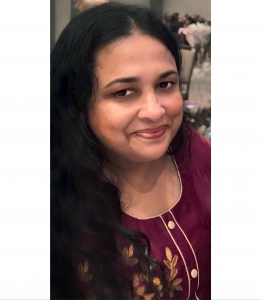
Munia Bhaumik is the Program Director of Mellon Social Justice Curricular Initiatives and an award-winning scholar of comparative literature, politics, and law. An alumna of UCLA, where she received her M.A. in Urban Planning, her research and teaching critiques racial and gender inequities as well as the multiple social factors impacting whose lives count before the law. Thus, as an academic researcher, she rethinks citizenship and democracy theory from the perspective of vulnerability, considering how marginalized noncitizen refugees, migrant workers, incarcerated persons, and undocumented (child) detainees are crucial social actors. Dr. Bhaumik received her PhD in Comparative Literature from the University of California, Berkeley before joining the faculty at Emory University in Atlanta where she engaged with new Asian/Latinx immigrant and African American community voting rights alliances in the South, while also developing a vibrant undergraduate degree program in comparative literature and critical theory. Based on her research about noncitizens as the “uncounted,” data and democracy, as well as on poetry as political action across the Global South, she received the prestigious Stanford Humanities Center, Herman Melville Society, and Cornell Society for the Humanities faculty awards. Prior to entering academia, Dr. Bhaumik also spent a decade as a primarily Spanish-speaking labor/community organizer on the staff of leading progressive organizations in Los Angeles shaping national debates about social justice through direct action. Her academic book, In Liberty’s Shadow: The Noncitizen in American Letters and Law, deploys close literary and theoretical readings of seminal literary and philosophical texts defining American political culture before 1900 to argue for a new democratic ethos of recognition for our present. Equally motivated by the humanities as by social movements, particularly the ethical dilemmas communities-of-color are mobilizing in this global (post)metropolis, her work brings to attention research protocols in alliance with the demands for abolition and noncitizen citizenship as well as multilingual, queer, migrant, worker, healthcare, and Black equal rights.
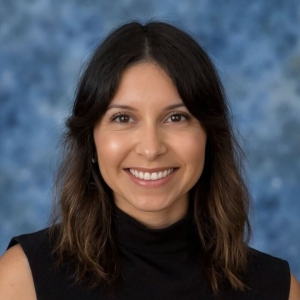
Christina-Marie Santillan, Assistant Director for Community-Engaged Learning
Bio
Christina-Marie Santillan (CM for short) has worked at UCLA for ten years and joined the Center in June 2023. She brings extensive experience in community education, higher education, communications, and business operations. She earned her bachelor’s degree in psychology with a minor in women’s, gender, and sexuality studies from Cal State Long Beach, and in 2017 completed her MBA with a concentration in project management at Mount Saint Mary’s University.
At the Center, CM coordinates and manages undergraduate academic programs and initiatives, including the 195CE internship program and the Community Engagement and Social Change minor. She also leads strategic communications and outreach efforts.
Throughout her career at UCLA, CM has worked closely with academic policy, student programs and services, and faculty and staff support. She previously served as Manager for the Undergraduate Education Initiatives unit, overseeing operations across multiple programs, and as Communications Manager for the Department of Mathematics, where she led marketing and engagement strategies for more than 13,000 alumni and donors.
Her background in community engagement is rooted in community education. As a national community organizer with a nonprofit focused on youth dating violence prevention, CM helped develop an online curriculum and trained more than 500 youth and adults across the country to implement the program in local school districts. In Los Angeles, she taught a residency program at Ánimo Watts Charter High School and delivered guest lectures at several middle and high schools throughout the county. In these roles, she collaborated with organizations serving Native American youth, LGBTQ youth, youth experiencing homelessness, and underrepresented students in low-income communities.
Bio
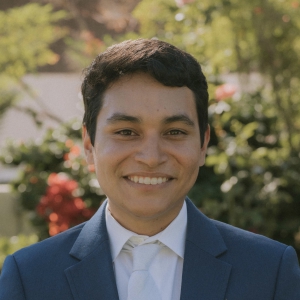
Charlie is the Quarter in Washington and the UC Center Sacramento program coordinator. He has been working for UCLA since May of 2022. His previous role at UCLA was as the Undergraduate Counselor for the Political Science Department. Charlie became the Quarter in Washington and the UC Center Sacramento program coordinator in October 2023. He received his bachelor’s degree from Cal State Dominguez hills in Sociology and went on to obtain his Masters in Guidance and Counseling from Loyola Marymount University. He is passionate about supporting any and all students towards their personal and academic success.
CESC Lecturers
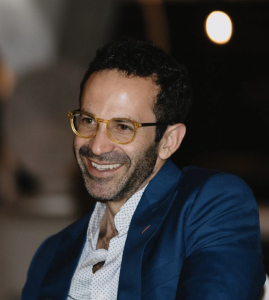
Zack Ritter, Lecturer
Bio
Dr. Zack Ritter is currently Associate Director of Strategic Initiatives at UCLA’s Center for Community Engagement, where he also teaches a senior capstone on research methods. Previously, he was Associate Dean of Students at Cal State Dominguez Hills, helping students facing housing and food insecurities. He was also the Associate Dean of Diversity at Harvey Mudd College and University of Redlands. He also spent several years in the nonprofit sector, building bridges between Muslim and Jewish communities. Dr. Ritter received his PhD from UCLA, focusing on East Asian international students, racial stereotypes, and American media promulgation of globalized race/class/gender hierarchies. He also has co-edited four books with the latest entitled: Restorative Justice and Practices in Higher Education.
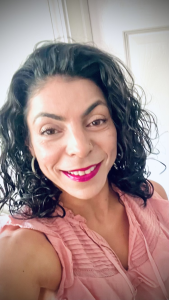
Bio
Originally from Ukraine, Marina has a Ph.D. in Communication from the University of Southern California’s Annenberg School for Communication and Journalism. She teaches courses in public speaking, intercultural and global communication, communication theory and public relations, among others. Marina’s research has focused on community activism to resist the changes of gentrification and how residents’ consumption of media, or lack thereof, might help or hinder resistance to profit-driven neighborhood change. She has worked with and conducted research in various Los Angeles communities to better understand the residents’ perspectives of gentrification and its social and cultural effects. Prior to her Ph.D. work, Marina worked in communication for human rights organizations and nonprofits in Los Angeles, New York and Germany.